WHOLEFIELD

Technology

Safety Architecture

WHOLEFIELD’s approach to safety architecture: redundancy, fault isolation, health monitoring and verification.

Explore Systems

Design Principles

WHOLEFIELD safety design follows the dual principles of fail-safe and fail-operational.


Grounded in the systemic relationships among monitoring, redundancy, and fault handling, this presents the engineering logic of the safety architecture; specific implementation is subject to verified information.

System Level

Multi-Redundancy System Architecture for High Safety Demands

Dual Flight Control Systems

Heterogeneous multi-source redundant design with millisecond-level seamless switchover, ensuring absolute safety of the control link in extreme environments.

Dual Communication Links

Dual redundancy via high-throughput satellite antennas and beyond-line-of-sight 4G/5G dedicated networks, delivering all-weather anti-jamming transmission and zero-blind-spot coverage.

Multi-Module Battery System

Independent, physically isolated multi-battery compartments with intelligent BMS balancing management. Failure of a single pack never compromises the power safety of the whole aircraft.

Aviation Safety Protection Architecture

Core Safety Protection Architecture

WHOLEFIELD consistently treats safety as the primary lifeline of aircraft. From avionics hardware and software to whole-aircraft mechanical structures and extreme emergency strategies, multi-redundancy mechanisms provide continuous protection.

System Level

Integrated triple-sensing algorithms and self-healing control modules. Millimeter-scale response speed, with real-time online diagnosis of multi-source physical parameters, ensuring absolute reliability of the main control hub.

Structural Level

Ten thousand extension and retraction tests. A high-strength aviation carbon fiber airframe, subjected to limit-load and multiple fatigue tests, built to withstand multidimensional high-altitude shear wind loads.

Emergency Level

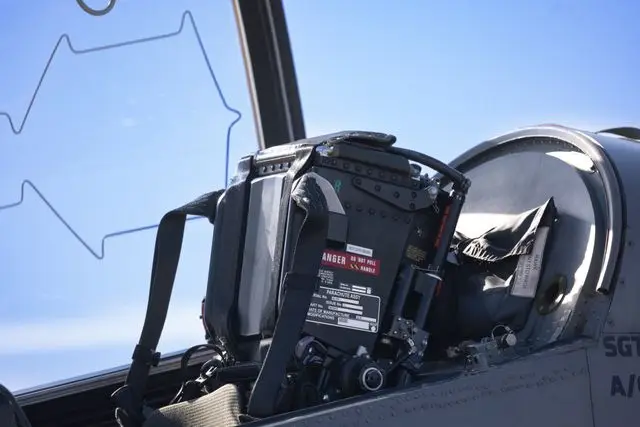
Fail-safe flight. Embedded millisecond-level redundant power allocation. In the event of extreme power loss, a ballistic whole-aircraft emergency parachute deploys instantly for a smooth soft landing.

Health Monitoring System

System Health Monitoring and Integrity Assessment Process

Sensing

Captures aerodynamic loads, structural deformation, and thermal distribution data in real time through multimodal fiber Bragg grating sensors and strain gauge arrays covering the entire airframe surface.

Assessment

Edge computing nodes integrate digital twin models to compare theoretical limits against historical damage baselines in milliseconds, accurately diagnosing fatigue damage and predicting remaining service life.

Response

Adaptively reconfigures flight control laws and generates high-confidence maintenance recommendations and logs, delivered via high-orbit satellite link to ground support terminals in a closed loop.

Verification


WHOLEFIELD Flight Control and System Safety Lifecycle Multi-Stage Verification Tracking

FMEA

● Completed

Closing Date: 2025-10-12

Aviation-grade safety-chain failure mode and effects analysis. Fully identifies critical single points of failure and functional boundaries, and designs and verifies fault-isolation, redundancy, and fault-tolerance mechanisms.

System Verification

● In Progress

Estimated Date: 2027-11-20

Cascaded closed-loop hardware-in-the-loop (HIL) verification of flight control computers and multi-physics sensors, covering fault-tolerant adaptive recovery under extreme high angles of attack and multi-channel sensor loss.

Final Verification

○ Pending

Estimated Date: 2028-12-15

Joint pre-first-flight review and final compliance determination for the complete aircraft. Working with the airworthiness authority and an expert review panel, a comprehensive compliance assessment covers the digital safety closed loop and its linkage with the physical aircraft.


WHOLEFIELD Streamlined Verification Process System

Built on end-to-end engineering traceability, we have restructured complex aerospace-grade verification stages. From early failure mode analysis to multi-loop physical simulation verification, we have achieved multi-level data closed loops, aiming to shorten flight-test verification preparation cycles by 40%.

Related Technologies


Aircraft Systems

Explore system architecture, flight control computing, and comprehensive integration solutions for next-generation aircraft.

Explore Aircraft Systems

R&D and Manufacturing

Leveraging advanced laboratories to research cutting-edge materials and core intelligent assembly processes under extreme environments.

Enter R&D Center

Technical Consultation

Contact our global specialists for customized avionics development tools and hardware-in-the-loop test engineering support.

Contact Technical Team

Explore Technical Details

Learn how WHOLEFIELD defines future aviation safety standards.

Technical Cooperation