WHOLEFIELD

Technology

Autonomous Flight


For autonomous flight: perception, situational awareness, trajectory planning and flight control, linked from sensing to execution.

View System Architecture

Technical Significance


WHOLEFIELD autonomous flight technology covers the full spectrum
from assisted piloting to fully autonomous flight

Autonomous Guidance System

Autonomous Flight Control and Situational Fusion


Structuring perception, decision-making, and execution to define the system coordination and operational boundaries required for autonomous flight.

Operational Modes

Dual Autonomous and Collaborative Control System

WHOLEFIELD aircraft feature multiple redundant designs,
supporting flexible switching between piloted and uncrewed autonomous modes
to handle diverse complex flight missions flawlessly while ensuring the highest safety level

Piloted Mode

Intelligent assistance, reduced workload

Uncrewed Mode

Full autonomy, end-to-end execution
Autonomous Flight Control Loop

Perception - Decision - Execution Closed-Loop Control

Core algorithmic hub for fully autonomous high-agility aircraft
High-precision multi-source sensor adaptive fusion
Rapid AI-powered dynamic path reconfiguration
Millisecond-level flight control response for precise correction

Phase 01

Perception

Multi-sensor fusion: millimeter-wave radar, LiDAR, and optical cameras are dynamically calibrated and fused to build precise, real-time, all-around three-dimensional environmental depth maps and obstacle geometric boundary models.

Phase 02

Decision-Making

AI path planning: Powered by onboard neural networks and high-frequency dynamic constraint algorithms, it adaptively responds to shifting weather and transient dynamic disturbances, generating optimal, wind-resistant, high-safety trajectories in milliseconds.

Phase 03

Actuation

Precision control actuation: High-stability flight control computers issue high-frequency, high-precision commands to propulsion systems and control surfaces, delivering rapid-response disturbance- and wind-rejection control torques to strictly track trajectory and attitude.

Feedback closed-loop: Real-time, millisecond-level telemetry transmission automatically recalibrates perception biases and decision models.

R&D and Validation Status

Multi-scenario validation: Stable operation in complex environments


Complex Urban Environments

In urban environments with dense high-rises, intense electromagnetic interference, and multipath effects, LiDAR and vision fusion achieves dynamic, centimeter-level obstacle detection and autonomous avoidance trajectory planning.

Island Wind-Shear Conditions

Under high salt spray, extreme humidity, and unpredictable island wind shear with severe convective conditions, autonomous control law dynamic reconfiguration algorithms deliver millisecond adjustments to maintain highly stable attitude in harsh environments.

Night and Low-Visibility Scenarios

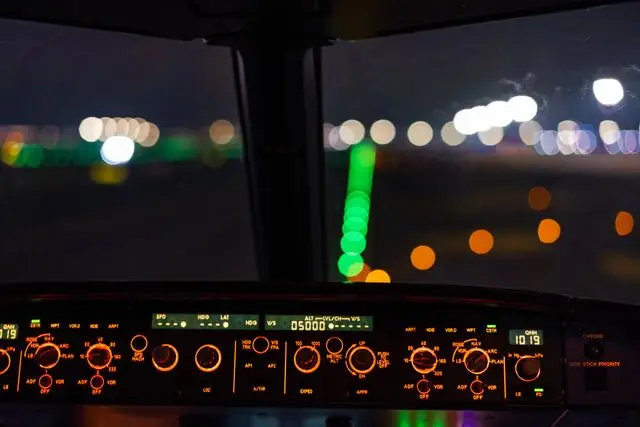
Using an infrared Synthetic Vision System (SVS) and millimeter-wave radar to penetrate low-altitude cloud and fog blind zones, the system achieves fully automatic, smooth landings even without visible-light assistance on zero-visibility runways.

Infinite Future

Explore More Technologies

Discover how WHOLEFIELD defines the future of aviation.